Testing device and data processing for the minimum ignition temperature tester of dust clouds
Testing device and data processing for the minimum ignition temperature tester of dust clouds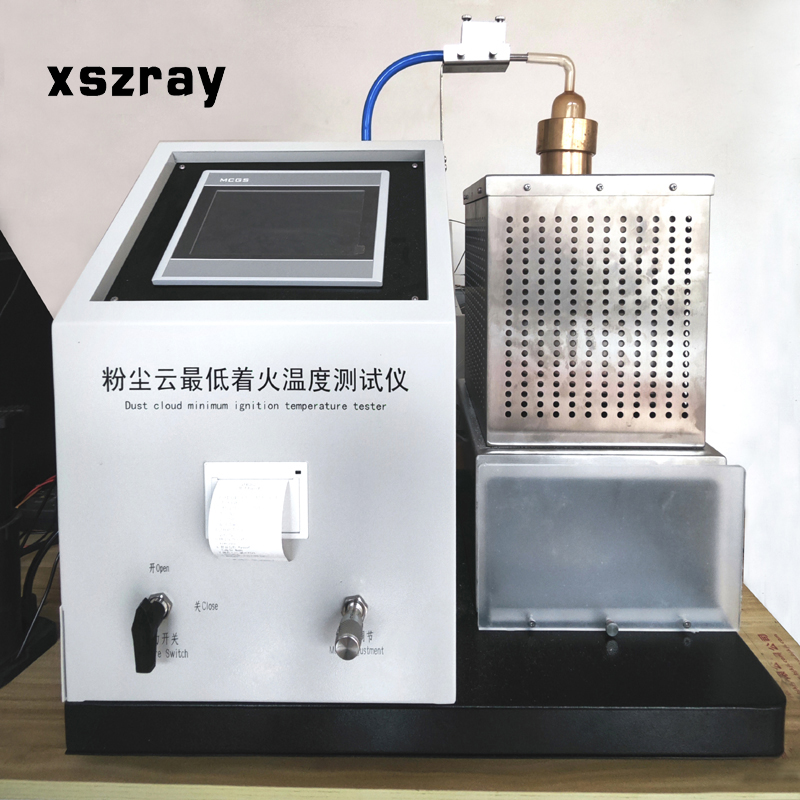
1、 Introduction to the determination of dust explosiveness testing
Conducting dust explosiveness testing to determine whether there is a risk of dust explosion in industrial and trade enterprises is an important technical judgment method.
Dust suspended in the air may ignite or explode if it encounters a sufficiently high temperature heat source. The ignition of dust clouds in the air is the initial stage of energy transfer causing an explosion. Once the dust cloud with a concentration within the explosion range is ignited, a dust explosion will occur.
The minimum ignition temperature of a dust cloud is the lowest heating temperature (ambient temperature) at which the temperature of the dust cloud (a mixture of dust and air) undergoes a sudden change (ignition) when heated.
2、 Testing device and data processing for the minimum ignition temperature of dust clouds
Testing device for determining the explosiveness of dust
ZR-FCY-8A Powder Dust Cloud Minimum Ignition Temperature Tester
This instrument is used to test the minimum ignition temperature of combustible dust and evaluate the potential explosion hazard of spontaneous combustion of dust clouds. A testing instrument used to test the ignition sensitivity of dust clouds in a specific heating environment.
Mainly used for dust explosion assessment in production and processing sites such as aluminum powder, zinc powder, plastic powder, intermediates of organic synthetic drugs, wheat flour, sugar, sawdust, dyes, bakelite ash, milk powder, tea powder, tobacco powder, coal dust, plant fiber dust, etc., to determine the minimum ignition temperature of dust clouds.
1、 Technical parameters:
1. Device structure: standard quartz furnace tube, quartz dust hood, and stainless steel gas storage tank;
2. Temperature control range: room temperature~1000 ℃;
3. Temperature measurement location: inside the middle of the heating furnace;
4. Temperature control location: Overall temperature control of the heating furnace, PID intelligent temperature control;
Testing method for determining the explosiveness of dust
Weigh 0.1g of dust and load it into a dust storage container. Adjust the temperature of the heating furnace to 500 ℃ and adjust the air pressure in the storage chamber to 10kPa. Open the solenoid valve and spray the dust into the heating furnace. If no ignition occurs, increase the temperature of the heating furnace in steps of 50 ℃ and reload the same mass of dust for the experiment until ignition occurs or the heating furnace temperature reaches 700 ℃.
Once a fire occurs, change the quality of the dust and the powder spraying pressure until a severe fire occurs. Then, keeping the dust quality and powder spraying pressure constant, the temperature of the heating furnace was lowered in steps of 20 ℃ for the experiment until no ignition occurred after 10 experiments. If ignition still occurs at 300 ℃, reduce the temperature of the heating furnace in steps of 10 ℃. When no ignition occurs during the experiment, change the dust mass and powder spraying pressure, and take the next temperature value. During the experiment, the dust quality and powder spraying pressure were adjusted according to specific experimental needs to study the effects of dust concentration and powder spraying pressure on the minimum ignition temperature.
Beijing scicentury co., ltd.