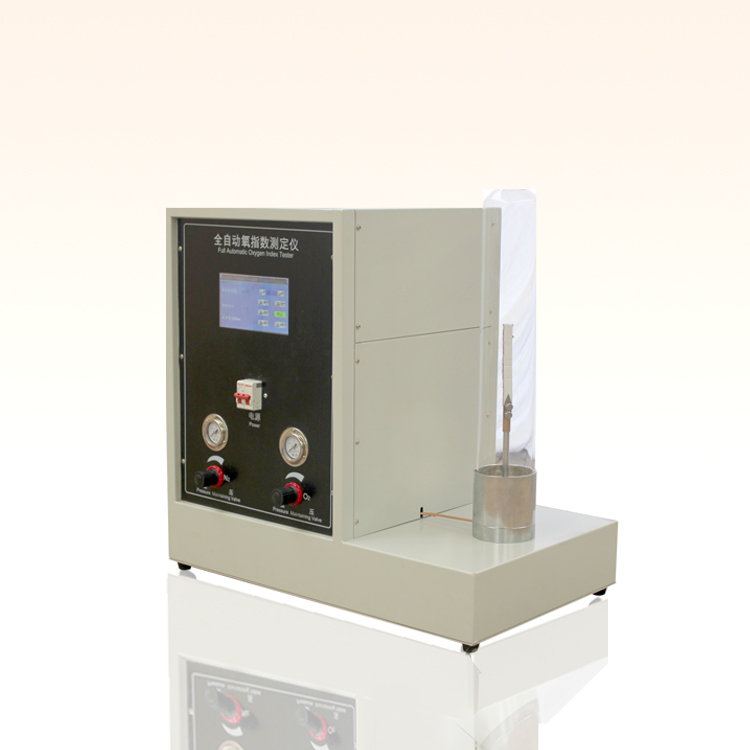
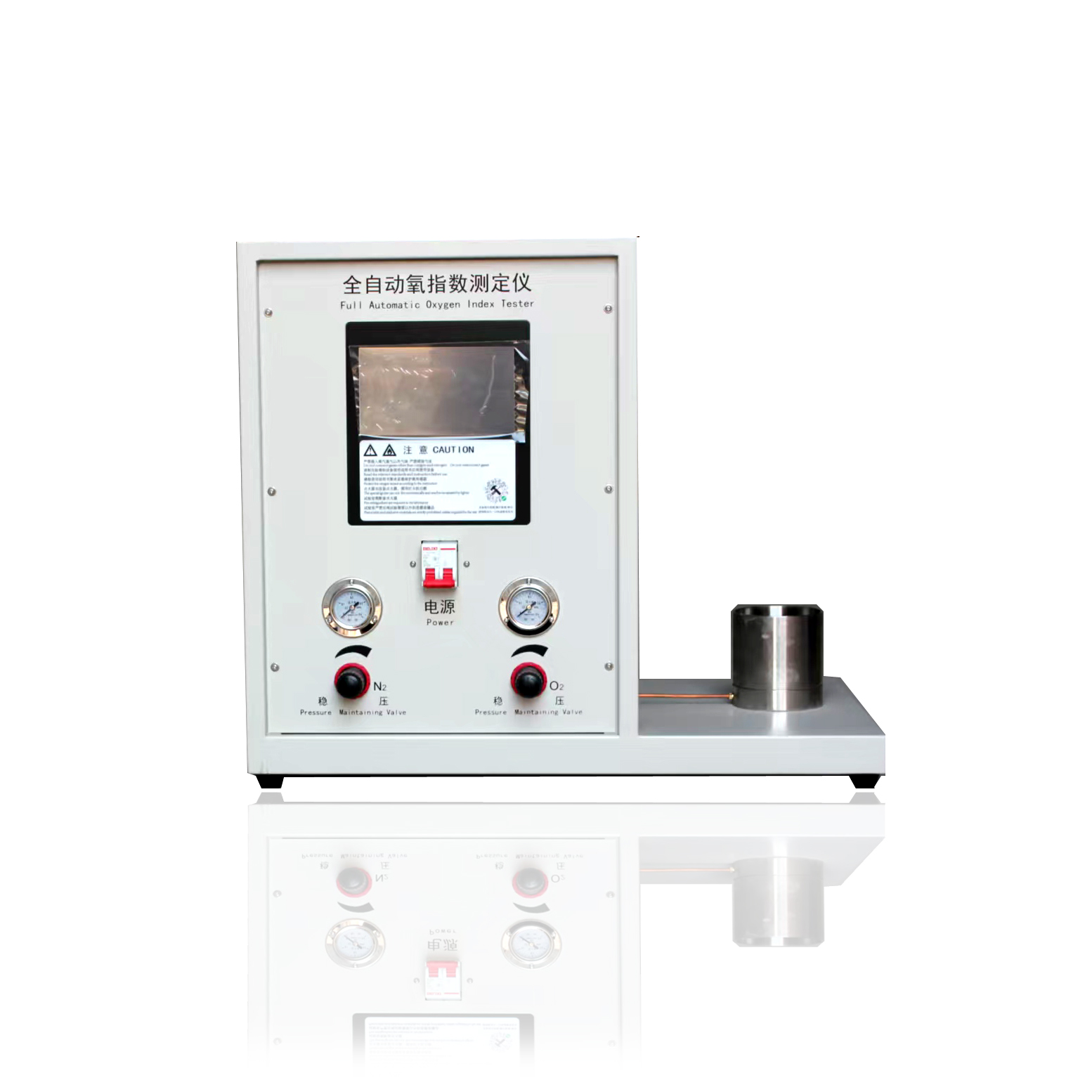
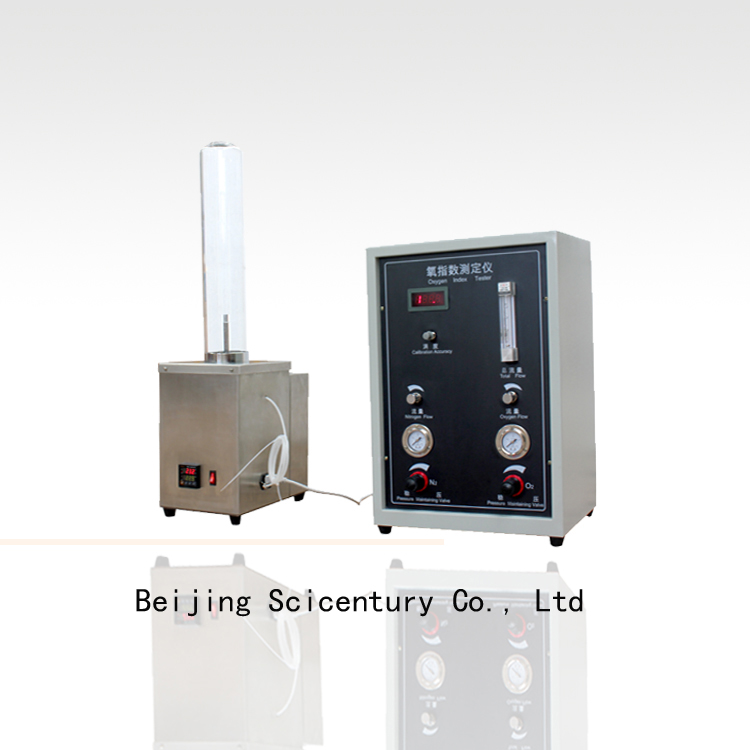
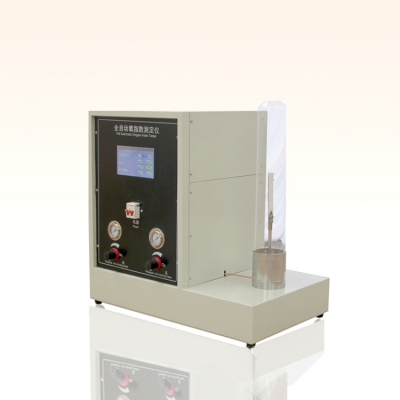
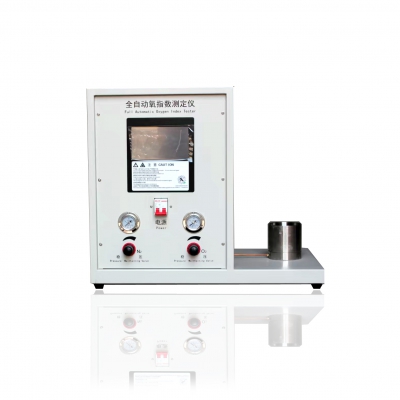
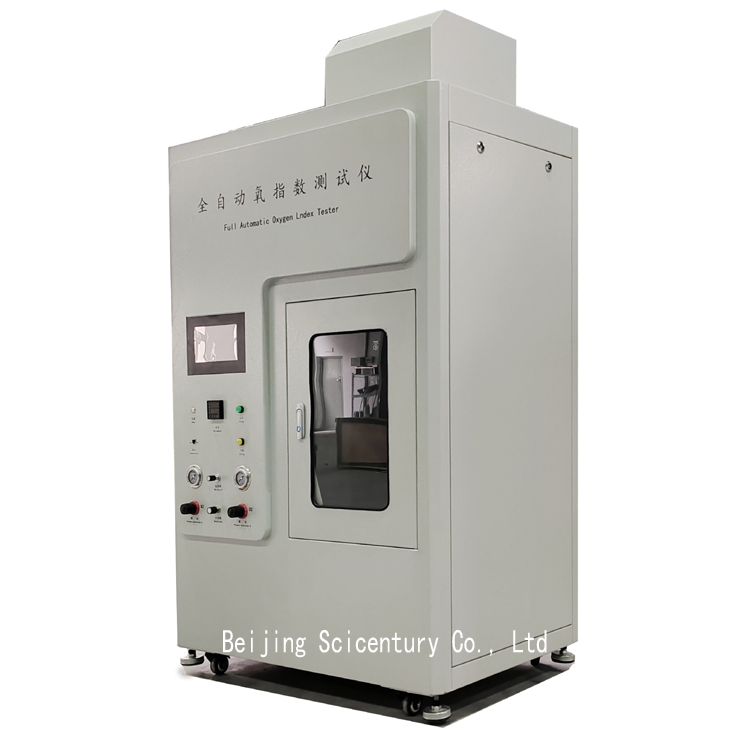
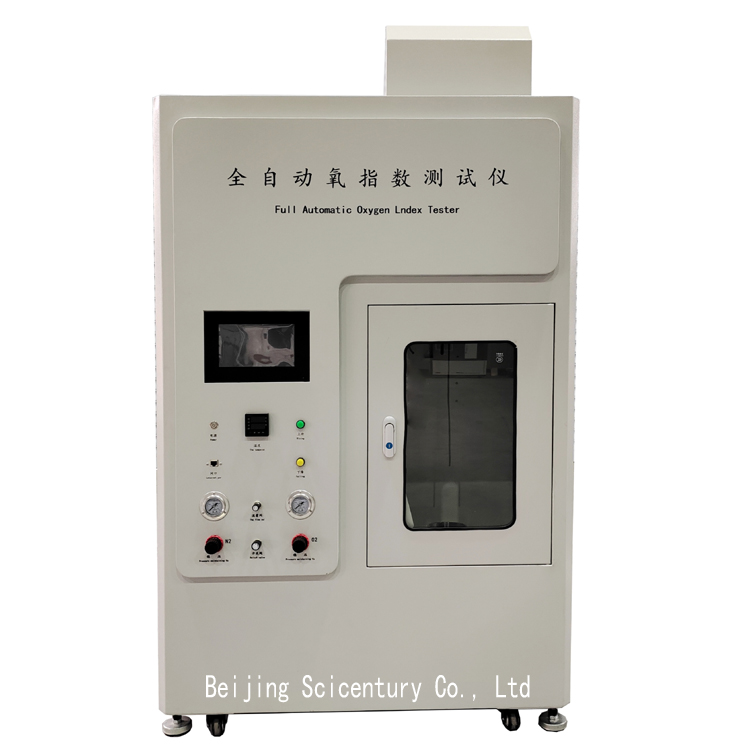
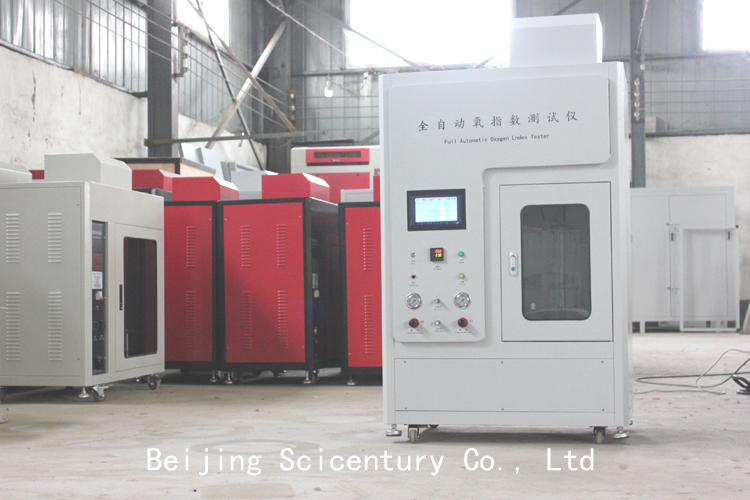
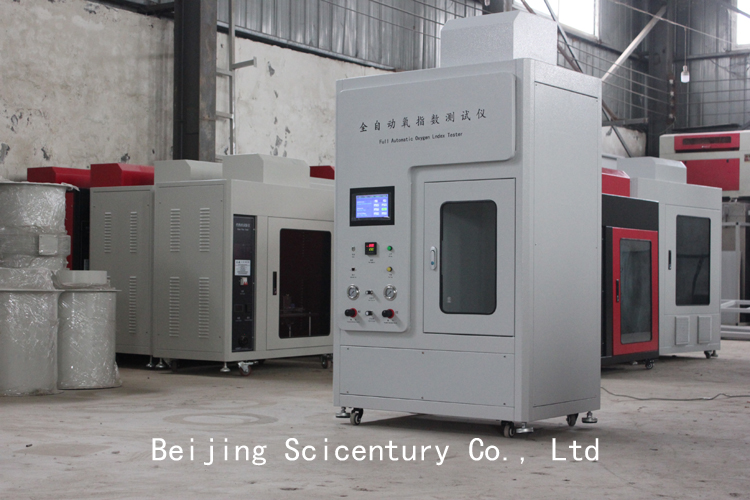
YZS‑20A Multifunctional Touch‑Screen Controlled High‑Precision Temperature‑Controlled Oxygen Index Tester
(With Smoke‑Exhaust Fume Hood)
I. Product Features
Full‑color touch‑screen control. Simply set the oxygen concentration value on the touch panel; the program will automatically adjust until oxygen concentration stabilizes and give a beep prompt, eliminating manual oxygen‑concentration adjustment. Supports one‑touch oxygen‑concentration calibration and data storage.
Stepped proportional valves are adopted to greatly improve flow‑control accuracy. Closed‑loop control enables the program to automatically correct oxygen‑concentration drift back to the target value during testing. It overcomes the drawback of traditional oxygen index testers which cannot adjust oxygen concentration mid‑test, substantially improving test accuracy.
Built‑in fume hood for automatic smoke exhaust.
II. Technical Specifications
Imported oxygen sensor; direct digital readout of oxygen concentration without manual calculation for higher accuracy. Measuring range: 0‑100 %
Display accuracy: ±0.01 %
Touch‑screen setup with automatic program‑driven oxygen‑concentration adjustment
One‑touch precision calibration
One‑touch concentration proportioning
Audible alarm upon oxygen‑concentration stabilization
Built‑in timing function
Experimental data storage
Historical data query
Historical data clearing
Optional 50 mm combustion‑length setting
Gas‑source fault prompt
Oxygen‑sensor fault prompt
Prompt for reversed oxygen‑nitrogen gas connections
Oxygen‑sensor aging prompt
Standard oxygen‑concentration input
Combustion‑chamber diameter configurable (two common specifications selectable)
Flow adjustment range: 0‑20 L/min (0‑1200 L/h)
Quartz glass combustion chamber: two optional sizes (inner diameter ≥75 mm or inner diameter ≥85 mm)
Gas flow velocity inside combustion chamber: 40 mm±2 mm/s
Overall dimensions: 94 cm × 72 cm × 160 cm
Automatic smoke exhaust: outer diameter of smoke‑exhaust duct: 7.6 cm
Test environment: ambient temperature: room temperature ~ 40 ℃; relative humidity: ≤70 %
Input gas pressure: 0.25‑0.3 MPa
Working pressure: Nitrogen: 0.15‑0.20 MPa; Oxygen: 0.15‑0.20 MPa
Automatically liftable propane (butane) ignition system. The igniter nozzle is a flexible metal tube with a nozzle inner diameter of Φ2±1 mm. It can be inserted into the combustion chamber to ignite specimens. Flame length: 16±4 mm, adjustable within 5 mm‑60 mm.
Gas supply: industrial‑grade nitrogen and oxygen, purity>99 %. (Note: Gas cylinders and connecting fittings shall be provided by the user.)
Tips: For oxygen index tests, one cylinder each of industrial‑grade oxygen and nitrogen (purity ≥98 %) is required. As these are hazardous goods for transportation, they are not supplied as tester accessories and shall be purchased locally from gas suppliers.
Power supply: AC 220 V (+10 %), 50 Hz
Maximum power consumption: 150 W
Self‑supporting specimen holder: mounts at the combustion‑chamber axis for vertical specimen clamping
Non‑self‑supporting specimen holder: secures two vertical edges of specimens onto the frame (optional; for flexible non‑self‑supporting materials such as textiles)
IoT function: data reading and computer‑side data storage via router; report printing supported
Constant‑temperature base: maintains mixed‑gas temperature at 23 ℃±2 ℃
Note on Oxygen Sensor
Introduction: In oxygen‑index testing, the oxygen sensor converts combustion‑related chemical signals into electronic signals for operator readout. The sensor functions like a battery and is consumed in each test. Higher test frequency or higher oxygen‑index values of tested materials accelerate sensor consumption.
Oxygen‑sensor maintenance: Apart from natural wear‑and‑tear, the following two practices help extend service life:
① If the equipment will remain idle for a long period, remove the oxygen sensor and store it sealed from oxygen at low temperature. A simple method is to wrap it with plastic wrap and place it in a refrigerator’s refrigeration compartment.
② For relatively frequent use (e.g., testing every 3‑4 days), after finishing daily tests, turn off the oxygen cylinder first, wait 1‑2 minutes, then close the nitrogen cylinder. Fill the gas mixing assembly with nitrogen to reduce ineffective oxygen exposure of the oxygen sensor.
III. Installation Conditions (User‑Supplied Items)
Space Requirement
Overall dimensions: 94 cm × 72 cm × 160 cm (including feet)
Weight: approx. 100 kg
Test bench: minimum length 1.2 m, minimum width 0.75 m. Smoke‑exhaust duct (10 mm diameter) shall be routed outward.
Power Supply
Gas Supply
Ventilation RequirementThe equipment shall be installed inside a fume hood, or flue gas shall be ducted to flue‑gas collection and purification systems.
Other Test SuppliesDual‑stage pressure‑reducing valves for gas cylinders (capable of setting output pressure to 0.2 MPa)
Design standard: GB/T 2406.2-2009 GB/T 2406.1-2008
Compliance with standards: ASTM D 2863, ISO 4589-2, NES 714 GB/T 5454 GB/T 10707 GB/T 8924-2005 GB/T 16581-1996 NB/SH/T 0815-2010 TB/T 2919-1992 IEC 61144-1992 ISO 4585-2002 ISO 4589-2-1996