



Working Principle and Advantages of Automatic Oxygen Index Tester
Working Principle and Advantages of Automatic Oxygen Index Tester
The automatic oxygen index tester is a precision instrument for testing the flame‑retardant performance of materials.
It complies with domestic and international standards including GB/T 2406.2 and ISO 4589.
It is mainly used to determine the minimum volumetric oxygen concentration required for various polymer materials to
sustain continuous combustion, namely the oxygen index.
It serves as a key device for evaluating material flame‑retardant grades and fire‑safety performance.
Compared with conventional semi‑automatic equipment, automatic models have become mainstream
in quality‑inspection laboratories and new‑material R&D institutions due to their intelligence and high precision.
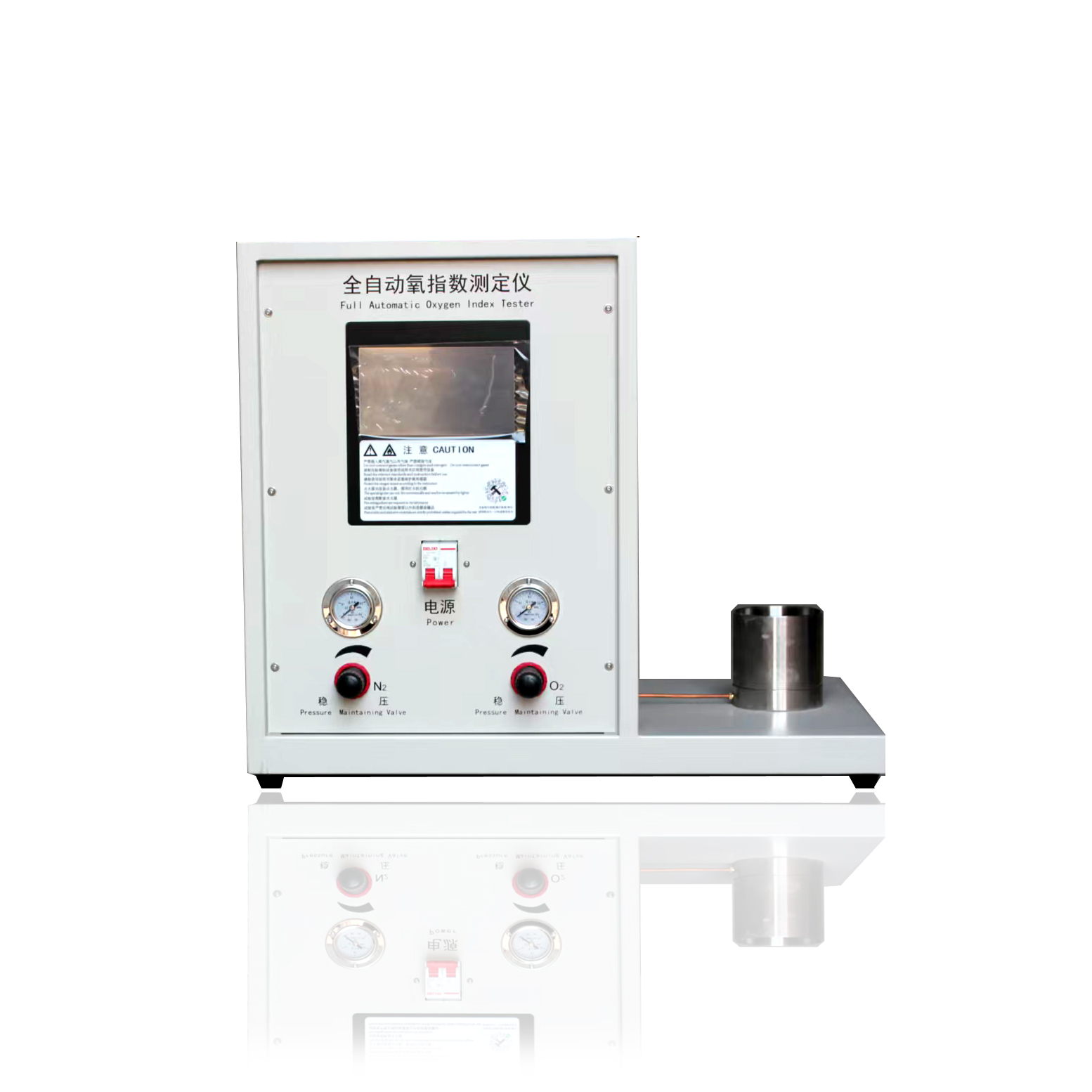
The instrument operates based on precise proportioning and regulation of mixed oxygen‑nitrogen gas flow.
Equipped with high‑precision mass flow controllers, the device independently regulates the inlet flow rates of oxygen and nitrogen.
An intelligent closed‑loop adjustment system dynamically modulates
the mixing ratio of the two gases to generate mixed gas flow with stable concentration,
which is continuously fed into the sealed combustion test cylinder. During testing,
a standard specimen is vertically fixed at the center of the combustion cylinder. After the ignition device ignites the specimen,
the system monitors its combustion status in real‑time and iteratively adjusts oxygen concentration automatically.
Finally, it captures the critical oxygen concentration value at which the specimen just sustains combustion or approaches extinction,
and completes the oxygen‑index calculation.
The advantages of automatic models lie in automation and accuracy.
Conventional equipment relies on manual flow adjustment, data recording and combustion‑state judgment,
which involves cumbersome operations and significant human errors.
In contrast, the automatic oxygen index tester realizes full‑process test automation.
No manual intervention is required from gas proportioning, specimen ignition,
status monitoring to data calculation and result output, which greatly reduces operational errors.
Meanwhile, the oxygen‑concentration control error of the instrument is kept within ±0.2 %, with excellent airflow stability.
It effectively eliminates test deviations caused by gas‑source pressure and ambient temperature fluctuations,
and greatly improves the repeatability of test data. Furthermore, it is fitted with an intelligent touch‑control system
for straightforward operation, with built‑in data storage and export functions to meet standardized testing requirements
of modern laboratories.
**Design Standards**: GB/T 2406.2‑2009, GB/T 2406.1‑2008
**Compliant Standards**: ASTM D 2863, ISO 4589‑2, NES 714, GB/T 5454, GB/T 10707, GB/T 8924‑2005, GB/T 16581‑1996,
NB/SH/T 0815‑2010, TB/T 2919‑1998, IEC 61144‑1992, ISO 15705‑2002, ISO 4589‑2‑1996
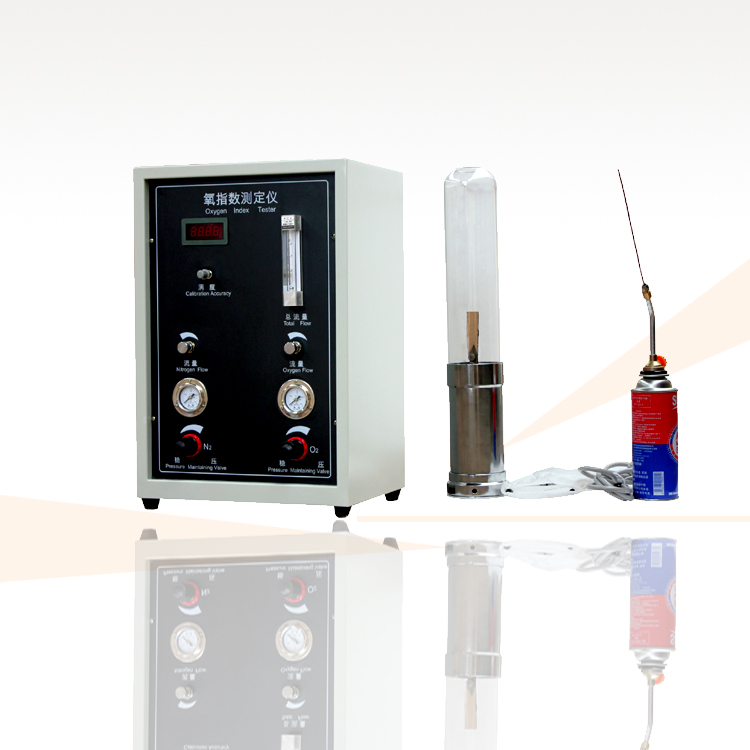
Developed, manufactured and supplied by Beijing Xunyu Technology Co., Ltd.
It realizes one‑click oxygen concentration proportioning, featuring convenient operation and high accuracy.